Excerpts From an Interview with a Jewish Leader About Blacks.


INTERVIEWER: Why are blacks so behind Economically?

JEWISH LEADER:The only aspect blacks understand is Consumption. Blacks don't understand the importance of building wealth.

The fundamental rule is to keep your money within your racial group. We build Jewish business, hire Jewish, buy Jewish and spend Jewish.

There is nothing wrong with that but it is a basic rule blacks cannot comprehend and follow;

"He kills his fellow blacks daily instead of wanting to see his fellow black do well" 93% of blacks killed in America are by other blacks.

Their leaders steal from their people and send the money back to their colonial master from whom they borrow the same money from.

Every successful black want to spend his money in the country of his colonial masters.

They go on holiday abroad, buy houses abroad, school abroad etc instead of spending this money in their own country to benefit their people.

Statistics show that the Jew's money exchanges hands 18 times before leaving his community while for blacks it is probably a maximum of once or even zero.

Only 6% of black money goes back into their community. This is why Jews are at the top and blacks are at the bottom of every ladder of society.

Instead of buying Louis Vuitton, Hermes, expensive cars, shoes, houses, dresses etc, blacks could industralize Africa, build banks and get rid of colonial institutions by putting them out of business.

INTERVIEWER:Your thoughts on failure of blacks after 150yrs?

JEWISH LEADER:Well, nothing is ever the blackmans fault. His compulsive habit of killing his own, compulsive material consumption.

His inability to build businesses or preserve wealth are usually somebody else's fault.

INTERVIEWER: So what can blacks do to liberate themselves

JEWISH LEADER: Blacks must take responsibility. Blacks must unite.

And vehemently fight corrupt leaders who run down their country and run to IMF as though IMF is Father Christmas

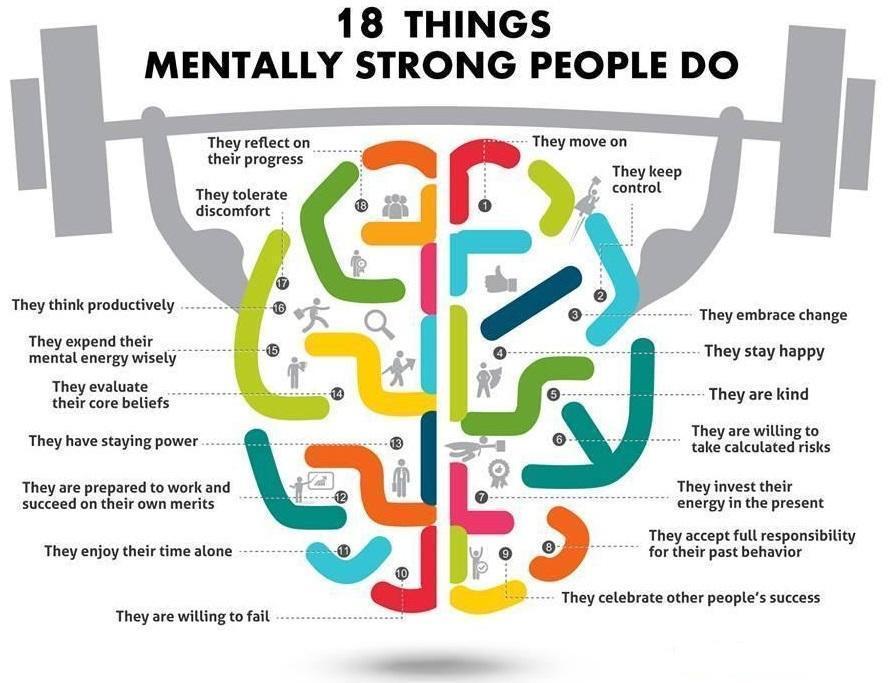
18 Things Mentally Strong People Do

Source: examinedexistence.com
mentally strong people do
WHAT A HUSBAND NEEDS FROM A WIFE IS NOT SEX.


Sex is an important element in marriage and until there is sexual intercourse between a husband and a wife, the marriage is not yet spiritually recognised. This shows how important sex is in marriage.When you look at how agressive men are towards sex you may think that what a man needs from a woman is sex.

Of course, if he has not married you yet or he does not really intend to marry you what he will need from you is nothing above your body. But if he really intends to marry you or if
you guys are already married sex is never what he needs from you.

Many young girls think because they are sexually active and experience they will easily be married and have their husbands loving them. And when a man approaches for marriage they think the greatest asset they have to show the man is sex.

Others also think once they are giving out their bodies it means they are giving out the best for which reason they will be chosen above all.

But submission is what men need, not sex. It is time for our young ladies to know that when a man is ready to marry he will not look out for a woman who will satisfy his sex drive but a woman who
will submit herself to him.

Excuse my language,
"every woman has female organs but not every woman has humility." So when you are a humble woman, you are an expensive jewelry. And a man of integrity will fear to lose you.

What does the Bible say, "wife, submit to your husband." The reason is that a man's true love
goes out only for a woman who is submissive.

Sadly, many youngs ladies in our days call submission as "control." And you will hear them
saying in tiny romantic voices, "As for me I don't want any man to control me oh." If you don't want to submit don't think of marriage because no man in his right sense will offer his love to a woman whose heart is higher than his height, no matter how short he may be. When a woman bows her knee before a man, the man will automatically bow his heart before her love. And love her sincerely. It is submission that truly makes you a romantic wife.

So be the African queen you want to be but when it comes to dealing with your husband, play the role of a humble maid. Don't forget that it is the spirit of humility that has caused many maids to hijack their mistresses' husbands. Be your man's queen and be his maid also.I wish you all the best.


Source: http://www.nairaland.com/2832973/what-husband-needs-wife-never

Evolution of Marriage – A Tanzania Perspective


Salam wakuu,


Leo nimemkumbuka mwalimu wangu wa somo la siasa enzi hizo kabla ya kubadilishwa na kuitwa uraia. Alikuwa ananiambia katika 'Ndoa' tamaduni mbili zikikutanishwa moja yenye nguvu huimeza iliyodhaifu.

Ili imezwe lazima mmoja aidharau yakwake na kuitukuza ya mwenzie akaniambia wazazi wako na babu zako walishikilia sana tamaduni zao, kuanzia lugha, mila na desturi lakini ninyi mmeanza kuruhusu kumezwa.

Hoja yangu ni ipi haswa.Kwa sasa ndoa zetu zipo mashakani kufikia umri wa ndoa za waliotutangulia hasa wazazi (wenye ndoa) waliishi kwa kuelewa ndoa ililindwa na utamaduni wao wakauenzi

Kwa sasa wanandoa wanaishi nyumba moja kama wako hostel tu na sio familia. Kisa wameruhusu umagharibi kuumeza utamaduni wao.

Mama anadai haki zote za ubaba, na kinyume chake. Hakuna kiwiliwli wote wamekuwa vichwa. Sheria zetu hasa ile ya ndoa ya 1977 nayo bado iliendelea kuegemea kwenye traditional culture. tuna vitu ambavyo hata kama tutaiga umagharibi hatuwezi vipindisha it's norms... mfano: mwanaume haolewi anaoa na ndio mtoa talaka. Hii ina maana gani? Yeye ndio kichwa cha ndoa. Ikitokea akawa Mario ni kosa la kimfumo kichwani mwake.

Siku hizi tuanishi., Ulimwengu wa Kambare kila mtu ana masharubu,mi sishangai sana nnavyoona wanaume tunaoa sio kwa kupenda bali kwa kuridhishwa kwa muda mfupi na vijitabia vya mchumba ili umuoe,na wengi tunaona ufahari sana kutangaza ndoa maana sio mchezo hiyo attention yake ukweni we ndio unakuwa topic+na mchumba ndio kama mlenda na tonge kwa ufupi ndoa siku hizi ni kama hobi tu.Hazina muelekeo wa kimaisha.

Wakati wazee huwa wansaherehekea miaka 50 ya ndoa, siku hizi Utakuta vijana wanasheherekea mwaka mmoja wa ndoa....!

Ndoa za ki Afrika....zimeharibiwa na tamaduni za kigeni na tamthilia.

Kubadilishwa kwa Jando na kuwa Send off(ambazo hazifai).
Upande wa wanaume na wazazi

Yote hayo ni kwa sababu ya kuupoteza utamaduni sasa kama kijana katahiriwa na mama yake kwa nini asiwe marioo? Huwezi kukuta mwanaume alie enda jando na kula kisu bila ganzi akawa marioo

Wanaume wengi nao wamepoteza Sifa za kuwa kichwa cha nyumba. unaishi kwenye nyumba hujui pango ni bei gani, unafungua fridge unatoa beer hujui mke wako ametoa wapi pesa. Hata wife akikwambia anakwenda seminar huna hata nguvu ya kuuliza utakaa muda gani.


Inasikitisha. Tubadilike watanzania. Mmoja mmoja na kama jamii kwa ujumla.

Source: Jamiiiforums

ABOUT KILIAN


About Me:
Kilian Kamota is an accomplished managerial professional with more than ten years experience of working in for-profit and non-profit organizations in Tanzania and the United States. His background includes expertise in multi–unit operations management, multi-million dollar P&L management, project planning & development, facility management,  customer relations & satisfaction, human resources management, vendor sourcing & negotiation, risk management & inventory control, as well as food, labor and  marketing cost control. Currently, Kilian work as an Assistant Manager for a well-established financial institution. Before joining this financial institution, Kilian worked as a banking Officer at Keybank Headquarters in Cleveland, Ohio. Keybank is one of the largest banks in the United States with approximately $87 billion of assets, 1,068 full service branches and a network of 1,620 ATMs. Kilian has also worked a senior accountant for Eliza Bryant Village NGO in Cleveland, Ohio between 2009 and 2011. Kilian has a Bachelor degree in Accounting and a Masters of Business Administration degree from Walsh University in North Canton, Ohio.

Kilian is a seasoned manager and a transformational leader who believes that organizations do not exists to make money but to serve their clients, employees and stakeholders and meet their needs. Profits and financial gains should always be secondary to service and excellence. Kilian leadership experience have created a passion for surpassing financial and service objectives via a combination of world class service delivery, lean operating methods,  renewed marketing directions, and incentive driven rewards for team achievement. Kilian derive genuine pleasure from transforming high-potential staff into outstanding leaders while demonstrating the creativity critical to financial and operational success. Kilian understands how to and the importance of leadership succession plan – how to train, prepare and transform employees into future managers and leaders. Kilian is a charismatic and creative leader who knows how to utilize the art of differential diagnosis to analyze different challenges in order to come up with relevant solutions. He has creative leadership skills with an uncanny ability to see things from a different perspective and come up with fresh, innovative thinking and new ideas to respond to new organization challenges. Kilian is a disciplined man of character who understand that leadership is about skills and character. Skills are what leaders do while character is who the leader is. Character is the foundation of a leader. A disciplined and hardworking leader will create a disciplined and hardworking team. A disorganized and incompetent leader will create a disorganized and incompetent team. Kilian understands the difference between leading and managing and is flexible enough to know when to manage and when to lead. Kilian will not only become a key team player in the organization but also an asset that appreciate in value with time and an important part of the future of the organization.

Kilian believes that leadership is paramount when it comes to organizational efficiency and economic development, and is currently conducting a thorough comparative research of different leadership paradigms in order to draw lessons that can be utilized to help nurture new approaches to leadership and governance.  Kilian has written several articles on areas of leadership, management and governance and is currently writing a book called Tanzania: The Next 50 Years. The book explores leadership challenges in Tanzania; and the type of leadership that is required, in the next 50 years, to lead Tanzanians to reach their new objectives.
 

ABOUT TANZANIA

Kilian was born in Tanzania -East Africa.
Below is Dar es salaam - The Capital city of Tanzania


The picture below show village tribal men in Tanzania called Maasai.


Tanzania is also known for having very nice beaches, beautiful animals in Serengeti and Ngorongoro, the highest mountain in Africa -Kilimanjaro and very nice hotels.

The beach in Dar es salaam

Animals in Serengeti National Park

Mount Kilimanjaro

Serena Hotel in Dar es salaam


Zanzibar Beach

 African Models in Tanzania

MY STORY


Early Years

Kilian Muya Kamota is a son of the late Mr. Athuman Muya Kamota and Mrs. Christina Innocent Hatia. Kilians’ father is a Zigua from Mgombezi Korogwe in Tanga-Tanzania and his mother is a Makua from Ndanda, Masasi-Mtwara. The Kamotas’s are Zigua’s who migrated from Handeni-Tanga and settled in Mgombezi Korogwe. Kilian is a great grandson of Mwenye Hatia who was Chief of the Makua Tribe in Masasi-Mtwara.


The Maasai Tribal Men in Arusha Tanzania


Kilian was born in Arusha and spent half of his childhood in Mtwara & Tabora [Chuo cha Uhazili] before moving back to Arusha [NAFCO-Basotu in Hanang District]. Kilian attended primary school in Ghairo Primary School located in NAFCO Basotu. At Ghairo Primary School Kilian was the head of student’s government [head prefect]. Kilian passed his Standard Seven National Examination and was selected to join Mawenzi Secondary School in Moshi, Kilimanjaro. Kilian was assistant head of student’s government [assistant head prefect - bweni] at Mawenzi where he also passed his Form Four National Examination with division one. He was then selected to join Minaki High School in Pwani, Tanzania. Kilian was chairman of student’s government in Minaki where he also passed his Form Six National Examination with division one. Kilian Graduated from Minaki on May of 1998 and went to pursue his University Studies in the United States. They say nyota njema huonekana asubuhi – Kilian’s early life is a true bright star. If indeed there is such a thing as a natural born leader then Kilian is truly an example of one. Over the course of his childhood and youth Kilian has continuously hold leadership positions everywhere he lived.


Downtown Moshi in Kilimanjaro-Tanzania
Higher Education
In the United States Kilian attended the Stark State College where he attained his associate degree in accounting and finance. He then went on to join the Walsh University in North Canton, Ohio where he attained his bachelor of accounting degree [in 2007] and masters of business administration in 2009. While pursuing his higher education in the United States, Kilian was the chairman and founder of the Tanzanian Association in Canton, Ohio.


Career
For the last ten years, Kilian worked as a senior accountant for several for profit and non-profit organizations in Canton and Cleveland, Ohio. Through out his career in the United States Kilian has continue to assume leadership and managerial positions in several for profit and non-profit organizations.

Kilians Beliefs & Philosophy
Kilian believes that life is all about choices and sacrifice but timing is everything. You must make right decisions at a right time if you are to fulfill your future aspirations. When it comes to life, Kilian does not believe in competition. Kilian believes that there are enough opportunities for each and every one of us to succeed and enjoy God’s divine mission for humanity i.e. equality, happiness and justice for all.

Read more...

KILIAN'S CALL TO TANZANIAN YOUTH


The Kilian Kamota’s Call to All Tanzanian Youth: Our Turn to Lead the Nation is Now
By Kilian Kamota


The task is ours, the Tanzanian youth, to decide the future and the fate of our Nation. Our fathers, the first generation of leaders, have done their part; they fought political colonialism and afforded us the political independence. The time has come for them to pass on the torch to us, so we can fight for socio-economic independence. We must show up, accept the torch and lead our Nation into new horizons. The future of Tanzania is in our hands – the Tanzanian youth. This is the task we can not ignore; this is the task we can not pass to someone else. It is our task, it is our duty. The question is what are we going to do about it? Are we going to show up for this noble task? Are we going to report for duty? Or are we going to let our Nation stray into wilderness and chaos without leadership? Are we going to decide the fate of our own future or are we going to let few politicians decide our fate and our future?

Our fathers – the first generation of leaders – have grown old. Their actions and leadership can attest to that. The time has come for them to pass on the torch and for us to take the realm. Let us help them retire in peace as we take over the noble task of leading our nation.

Letter to the First Generation of Leaders – Good Bye and Good Luck
On behalf of all Tanzanian youths’, i wish to express sincere gratitude to our fathers – the first generation of leaders – for all the hard work and dedication to our Nation. Your hard work and efforts is truly appreciated, it will not be forgotten and will not perish in vain. We will always cherish all that you were able [and not able] to achieve. And to that end, we want to wish you good health and good luck as you retire in peace. Please take on your new task of advising the new generation and raising grand children at home. Please retire in peace and watch us – your children – take on our new task of leading the Nation. You have educated us enough, you have prepared us enough and now we are telling you that we are ready to lead our Nation and take it into new horizons.

We salute you and bid you farewell – all Tanzanian workers and farmers of the 1960’s, 70’s, and 80’s. Kwaherini, enyi viongozi, wakulima na wafanyakazi wote wazee Tanzania, tunawatakia kila la heri na mapumziko mema ya uzeeni!

Letter to the Tanzanian Youth – Please Report for Duty.
Kwenu vijana wote Tanzania – karibuni katika safu mpya ya uongozi wa Tanzania mpya.  Karibuni katika safu mpya ya wakulima na wafanyakazi wa Tanzania mpya.

On behalf of the new Tanzanian generation, I call upon all Tanzanian youths to report to work. Welcome to your new position, welcome to the future. This is not a political movement; it has nothing to do with politics, religion or tribes; it has nothing to do with party or political affiliation.  This is a National movement and  has everything to do with the future of our Nation. Regardless of party or political affiliation, all Tanzanian youth must assume leadership responsibility anywhere they are and start working today to lead our Nation towards new horizon. True leadership has nothing to do with ones level or title in the society. There are many individuals in the world who don’t hold leadership position, yet they are providing leadership all the time, just as there are many others who hold leadership position, and yet they are not providing much leadership at all. let us provide the new leadership that is in dire need to transform our Nation.

Serious time’s calls for serious measures. We must have a sense of urgency and seriousness on the matters dear to our hearts. We must united together and forgo our religion and political affiliation and work together to provide the leadership needed to resuscitate our nation.

How Do We Start the New Task of Leading Our Nation?
By revolutionizing our minds- The time has come for us to acquire a revolution in our mindset. A revolution that will enable us to see things

THE #1 REASON LEADERSHIP DEVELOPMENT FAILS


By Mike Myatt, Forbes Magazine March 2013

Over the years, I’ve observed just about every type of leadership development program on the planet. And the sad thing is, most of them don’t even come close to accomplishing what they were designed to do – build better leaders. In today’s column I’ll share the #1 reason leadership development programs fail, and give you 20 things to focus on to ensure yours doesn’t become another casualty.

According to the American Society of Training and Development, U.S. businesses spend more than $170 Billion dollars on leadership-based curriculum, with the majority of those dollars being spent on “Leadership Training.” Here’s the thing – when it comes to leadership, the training industry has been broken for years. You don’t train leaders you develop them – a subtle yet important distinction lost on many. Leadership training is alive and well, but it should have died long, long ago.

This may be heresy to some – but training is indeed the #1 reason leadership development fails. While training is often accepted as productive, it rarely is. The terms training and development have somehow become synonymous when they are clearly not. This is more than an argument based on semantics – it’s painfully real. I’ll likely take some heat over my allegations against the training industry’s negative impact on the development of leaders, and while this column works off some broad generalizations, in my experience having worked with literally thousands of leaders, they are largely true.

An Overview of the Problem
My problem with training is it presumes the need for indoctrination on systems, processes and techniques. Moreover, training assumes that said systems, processes and techniques are the right way to do things. When a trainer refers to something as “best practices” you can with great certitude rest assured that’s not the case. Training focuses on

The Nature of Leadership and Policy Problems in Tanzania

By Kilian M. Kamota

 Introduction:
There are noises and confusion everywhere across the country concerning leadership and public policy issues in Tanzania. The fact that there are leadership inadequacy and policy problems across the Nation seems to become a nationwide consensus today. The call for and the eventual agreement to reevaluate the constitution is a vivid evidence of the matter.  The evidence can also be seen all across the Nation as citizen’s outcry regarding socio-economic problems is spreading like a wild fire. Over the last six months alone [from September 2012 to March 2013] we have witnessed intense citizen outcry over the issues of gas exploration in Mtwara, the form four national examination results fiasco, the everyday clashes between police and citizens, the continue electricity and water supply woes as well as the issue of religion conflicts – to mention the few.  All these issues bring us to a realization that how leaders formulate and implement socio-economic policies in Tanzania is more than a puzzle. It is a perplexity that requires a shift in mindset and a recognition that the current socio-economic landscape is changing, and as it changes, the role of everyone involved [in formulating and implementing policies] from citizens to leaders and all stakeholders must evolve. Who decides how the country’s future will look, in terms of policies, politics, governance and the economy, that affects people well being is an important question that requires a paradigm shift (or at least a semi-paradigm shift). It is the million dollar question, the challenge and the opportunity for all Tanzanians that stimulate a rich dialogue as Tanzanians consider their varying needs and the types of leadership that is required to lead them to reach their new objectives.

 The nature of leadership and policy problems in Tanzania is nothing new to a young and upcoming developing nation. The problem has been a long standing Public Administration challenge of reconciling public policy theory and practice. Sabatier & Mazzmaiman, in their book The Implementation of Public Policy (1980), defined the gap as the widening of the distance between stated policy goals and the realization of such planned goals. For Tanzania, in specific, the problem is a result of lack of citizen participation; lack of fundamentals of stable and responsible government; the structure of constitution; the structure and system of government as well as the nature of country’s presidential institution, democracy and the policy system.

Although Tanzania is a democratic country but the effectiveness and responsiveness of its government comes into question when you analyze their actions and their policy results. The Tanzanian leadership and policy system –the government, the constitution, its democracy and leadership - is an old paradigm. The old system has been left behind. Times have changed; the Nation has changed; public needs, objectives and goals have changed but the system has remained the same. And making the changes necessary, given the power and stereotype that remains in the minds of citizens and rigid leaders, may be very difficult unless the first generation of leaders and administrators which has grown old agree to transfer their responsibilities to the new breed of leaders and administrators. By acknowledging the potential for positive change and renewal that can arise from a new breed of leaders and administrators, Tanzanian’s can find a different paradigm for transforming government performance. The task is our, Tanzanians, to assist our leaders to achieve a revolution in management and leadership thinking. Through a revolution in mindset “public managers will acquires a new world view, a new intellectual framework, and a new paradigm from which to see both the current requirements for leading organizations and the challenges of creating institutions capable of qualitative and transformational change in performance and service deliver (Kiel, 1994; Daneke, 1990).

 Fifty years after gaining independence from Great Britain in 1961, the Tanzanian government today is facing same problems that the United States government was facing fifty years after the American Revolution [when America was a young and upcoming nation]. When Andrew Jackson became president of the United States, in 1829, the American